

The Three Layers of Resilience: A New Way to Understand Human Performance
Resilience is often spoken about as if it is one thing - a personal strength, a mindset, a recovery mechanism or a set of habits. But within high-performance environments, resilience behaves more like a layered system. Some layers support the everyday rhythm of life. Others activate during transition or adversity. And a deeper layer emerges only when the demands of performance stretch beyond what is routine.
In Balancing Act, these layers are described as:
- Daily Resilience
- Transitional Resilience
- High-Performance Resilience
Each has a different purpose, a different feel, and a different set of cues. Leaders operate more effectively when they understand which layer they’re in, and when to shift between them.

1. Daily Resilience: The Foundation
Daily Resilience is the rhythm that carries us through ordinary life: the decisions we make about sleep, hydration, structure, transitions between tasks, and the management of cognitive load. It is subtle and often overlooked, yet it determines whether we enter the day in deficit or in credit.
In interviews with high performers, this layer is consistently the most predictive of long-term stability. When Daily Resilience is compromised, leaders describe feeling ‘behind themselves’, present, but without the sharpness, energy or focus they usually carry.
This is the layer that allows the nervous system to stay regulated, the mind to stay clear, and the emotional bandwidth to stay available for relationships, leadership, decision-making.
2. Transitional Resilience: The Layer of Change
Transitional Resilience is activated during periods of movement, for example, role changes, personal transitions, organisational shifts, or moments where identity is being reshaped. It requires more energy, more self-awareness, and more intentional strategy.
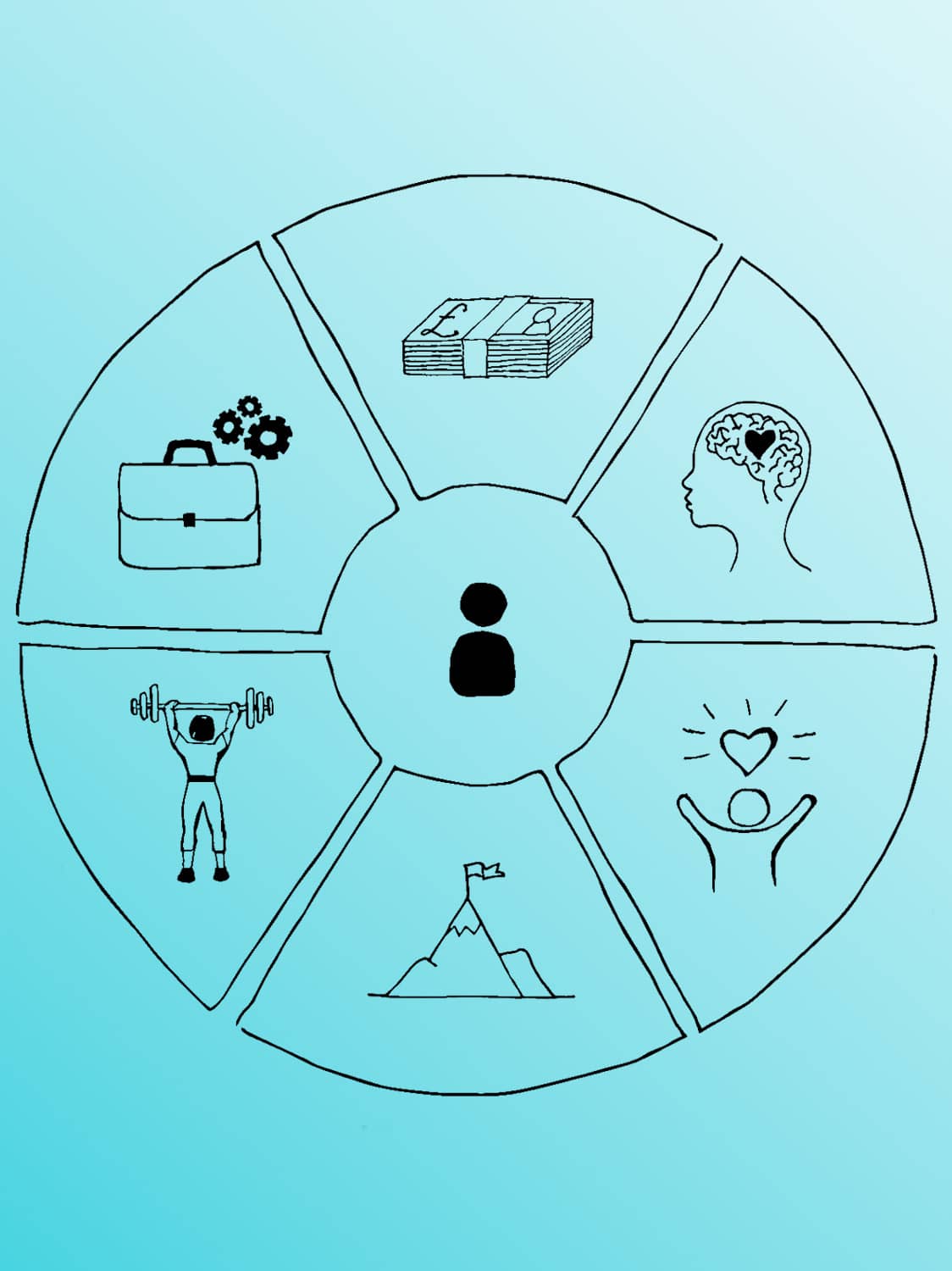
In this layer, the leader’s job is to ‘carry the transition’ without allowing it to fracture the foundations beneath it. This is where the Calibration Model becomes essential. The paradigms of Money-Mission, Mental-Physical, and Work-Life begin to interact more dynamically. A shift in one area causes movement in another.
Transitional Resilience is not about being unaffected. It is about staying connected to the core of who you are while the environment changes around you.
3. High-Performance Resilience: Operating Under Load
High-Performance Resilience emerges when demands exceed what the system finds comfortable. It is the layer associated with peak moments: major decisions, crisis, high-pressure delivery, or environments where precision and strength (or mind and/or body) matters.
Athletes describe this layer not as effort, but often as focus or flow, an intensity that feels controlled and often niched or framed. Military leaders describe it as focus without noise. Executives often describe it as ‘the zone,’ where action feels sharp and purposeful.
But none of this is possible if the first two layers are neglected. High-performance capacity relies on Daily Resilience as its stability and Transitional Resilience as its adaptability. Without these foundations, the high-performance state becomes unsustainable.
Why These Layers Matter
Resilience becomes fragile when it is treated as a single skill. It becomes sustainable when it is treated as a system.
Leaders evolve when they stop asking, ‘How do I become more resilient?’ and instead ask, “Which layer am I operating from, and what does this moment, or what will this moment, require?”
The shift is subtle but profound. It replaces self-criticism with strategy. It transforms resilience from a test of strength into a form of alignment. And most importantly, it gives leaders permission to adapt, because no single version of resilience is designed to hold up in every season of life.