
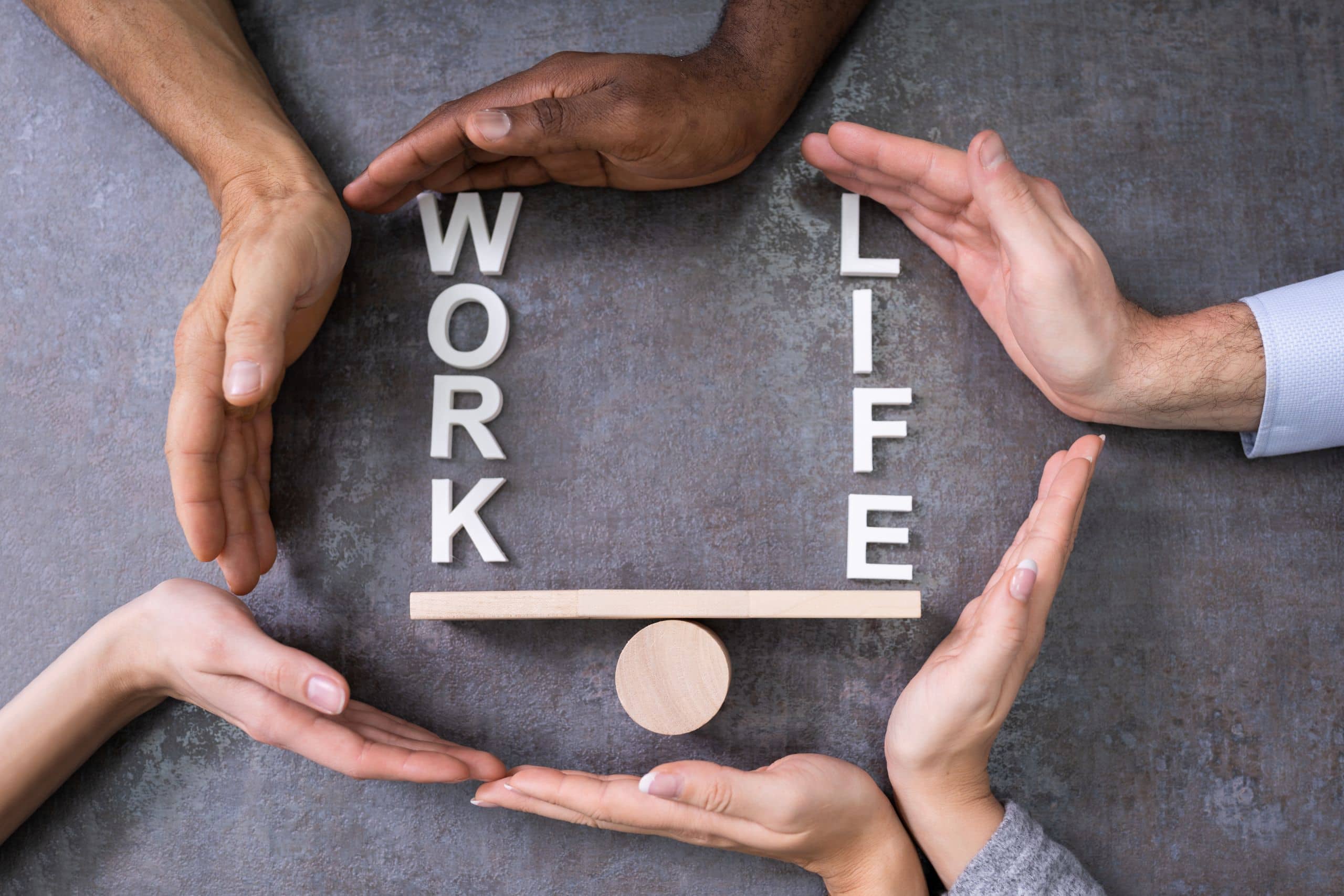
Rethinking Work-Life Balance in the 21st Century
Why traditional definitions no longer hold
For much of the past three decades, work-life balance has been discussed through a relatively narrow and increasingly outdated framework. Academic literature and organisational policy have tended to assume a standard model of work-full-time, permanent employment with a single employer, and a similarly restricted understanding of life, most commonly centred on caring responsibilities for dependent children. While this framing once reflected the dominant employment landscape, research now suggests it captures only a partial view of how people live and work.
Contemporary studies argue that both “work” and “life” have diversified significantly. Work is no longer confined to a single role, organisation, or location. Careers are increasingly non-linear, characterised by portfolio working, self-employment, hybrid arrangements, short-term contracts, and transitions between sectors. At the same time, life outside work encompasses far more than parenting. Research highlights the importance of elder care, health management, education, community participation, personal development, and recovery as central components of modern life.
This matters because when work-life balance is defined too narrowly, large sections of the workforce become invisible within policy and practice. Individuals without dependent children, for example, still experience significant tension between work demands and non-work priorities. Likewise, professionals in non-standard employment arrangements often face balance challenges that are not adequately addressed by policies designed for traditional roles.
Broadening the concept of 'Balance'
A growing body of research positions work-life balance as a subjective, dynamic experience rather than a fixed or universal state. Balance is best understood as the extent to which individuals feel able to meet the demands of work alongside the priorities that matter to them outside work, given their specific circumstances and values.
Studies consistently demonstrate that satisfactory work-life balance is associated with positive outcomes at both individual and organisational levels. Individuals reporting better balance show higher psychological wellbeing, lower stress, greater job satisfaction, and stronger overall life satisfaction. Organisations benefit through higher engagement, reduced absenteeism, improved retention and more sustainable performance over time.
Importantly, research also cautions against approaches that target balance support at narrowly defined groups. When work-life balance initiatives are framed primarily around parenting, they risk reinforcing inequity and limiting their effectiveness. A broader, more inclusive understanding of balance is therefore not only more accurate, but also more strategically sound.
Implications for high-performance environments
For professionals operating in demanding roles, this research reinforces the importance of alignment rather than optimisation alone. Sustained performance depends on recognising the full spectrum of life demands that sit alongside work. Organisations that acknowledge diverse life priorities are better positioned to support focus, decision quality, and long-term contribution.
Within the Balancing Act - Mastering Work, Wealth and Wellbeing Calibration Model, this reconceptualisation underscores a central principle: sustainable success requires calibration across work, wellbeing, and personal priorities. When work consistently dominates all other domains, the cost is rarely immediate, but it is almost always cumulative.
Practical takeaways
For organisations:
- Review how work-life balance is defined internally, ensuring it reflects diverse life priorities rather than a single life stage or circumstance.
- Design flexible practices that accommodate different career paths, employment arrangements, and non-work responsibilities.
- Encourage manager-employee dialogue about balance as an ongoing conversation rather than a policy-driven exercise.
For individuals:
- Clarify what balance currently means in your own life, considering health, relationships, learning and recovery alongside work.
- Recognise that balance is dynamic and requires periodic reassessment as roles and life contexts change.
- Use balance as a strategic input to career and workload decisions rather than something addressed only when strain appears.