
Integrating Mental and Physical Performance for Sustainable Success
Mental performance and physical performance are often treated as parallel tracks.
Stress is framed as psychological, focus as cognitive, movement and recovery as physical. The reality, as explored in the Mental-Physical Paradigm in Balancing Act, is that these systems are tightly integrated. The health of one shapes the capacity of the other.
Leaders frequently try to solve physical depletion with mental effort: pushing through late nights, stacking meetings, running on caffeine and willpower. It works in brief bursts. Over time, clarity dulls, patience thins, creativity flattens, and the ability to regulate emotion weakens. The system is not failing. It is signalling.
The Body Is Not Separate from Leadership
The book looks at the brain as an energy-hungry organ, drawing heavily on oxygen, glucose and nutrients to function at a high level.
When sleep shortens, movement drops, nutrition becomes erratic, or recovery windows vanish, the first thing to suffer is not posture or appearance. It is the quality of your decisions.
You feel it as:
- Thinking that becomes less flexible or more black-and-white
- Emotional spikes that arrive faster and subsides more slowly
- A sense of being present, but not fully available
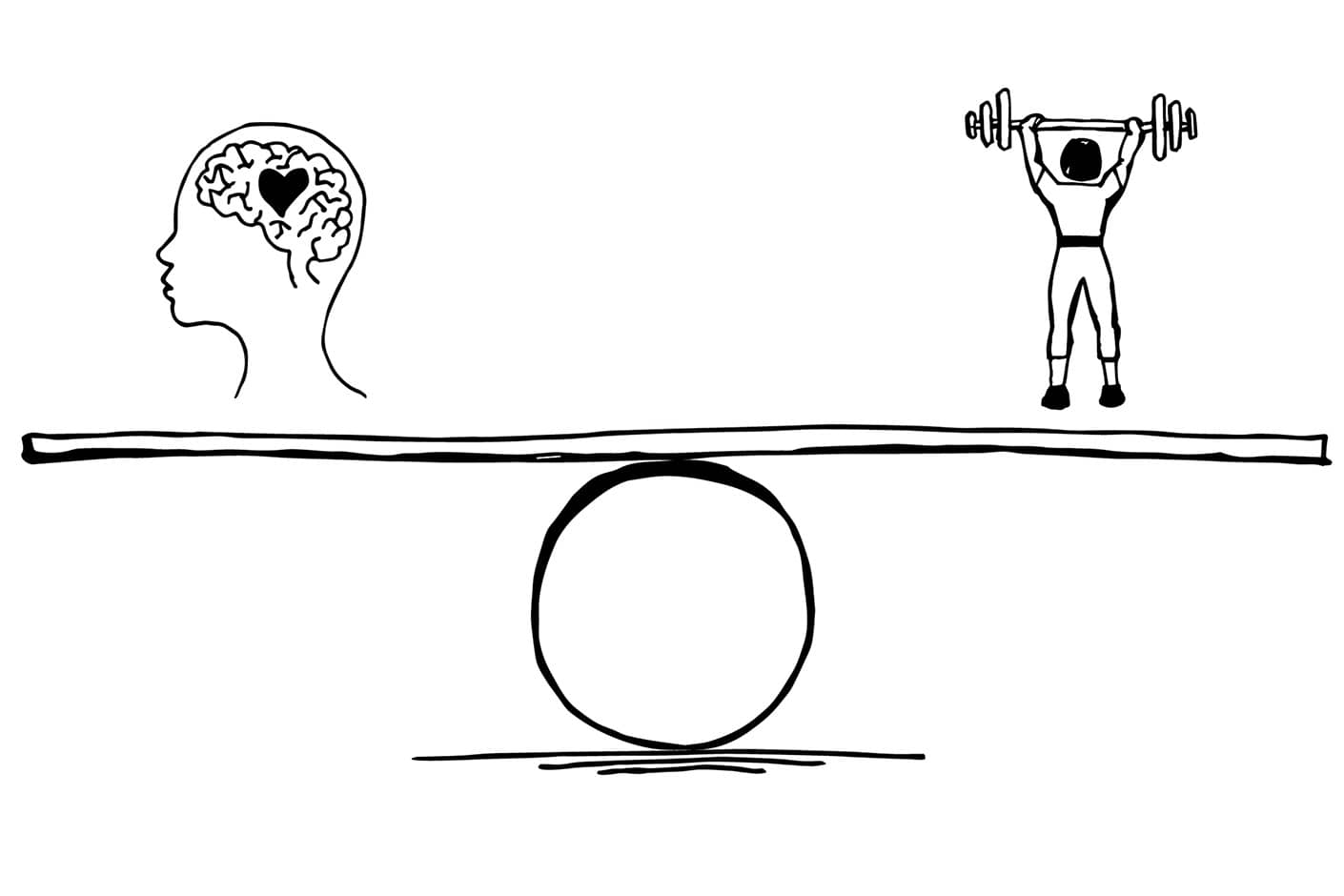
The Mental-Physical Paradigm challenges the idea that you can maintain high-level thinking in a chronically under-resourced body. It reframes physical behaviours such as movement, sleep, nutrition and breath, as leadership infrastructure rather than personal add-ons.
Performance Requires Rhythm, Not Constant Intensity
In Chapter 5, the Energy Calibration System breaks energy into four domains: physical stamina, emotional state, mental clarity and purpose. You are encouraged to map how each rises and falls across the day and week.
This mapping reveals patterns:
- Mental fatigue consistently appearing after long strings of virtual meetings
- Emotional volatility following poor sleep or extended travel
- Physical tiredness after cognitively heavy but physically static days
- Purpose energy lifting when working on missions that matter
Peak performance, in this model, is not about pushing harder in one domain. It comes from aligning these energies so they support one another.
The Integrated Leader
An integrated leader does three things differently:
- Reads physical cues as leadership data, noticing when tension, headaches, or exhaustion appear and asking what load (mental, emotional, or physical) is driving them.
- Pairs cognitive demand with physical support, aligning high-focus work with high-clarity windows, intentionally spacing meetings, and using micro-recovery, breathwork or short movement to restore capacity.
- Treats routines as strategic, not optional, sleep rhythm, movement, and performance nutrition are treated as non-negotiables during big seasons, not luxuries reserved for quieter times.
Putting Mental-Physical Integration Into Practice
This week:
- Choose one day and track your four energies (physical, emotional, mental, purpose) at three points: morning, mid-day, evening.
- Notice which commitments sit on top of low-energy points.
- Move just one demanding task into a higher-energy window and protect that time.
If you’d like a structured way to do this, Balancing Act includes:
- The Energy Mapping Grid
- Guidance on performance nutrition, sleep and micro-recovery
- A Peak Performance Integration Matrix that pulls mental and physical tools together for real-world leadership seasons
It turns vague awareness (“I know I should look after myself”) into a concrete, repeatable system.